
The Future of Social Housing: What Staff Need to Know in 2026
According to a publication on Gov.uk, an English Housing Survey states that over 4 million households in England live in social housing. That scale means operational shifts affect millions of residents, and regulation is tightening.
2/23/20261 min read
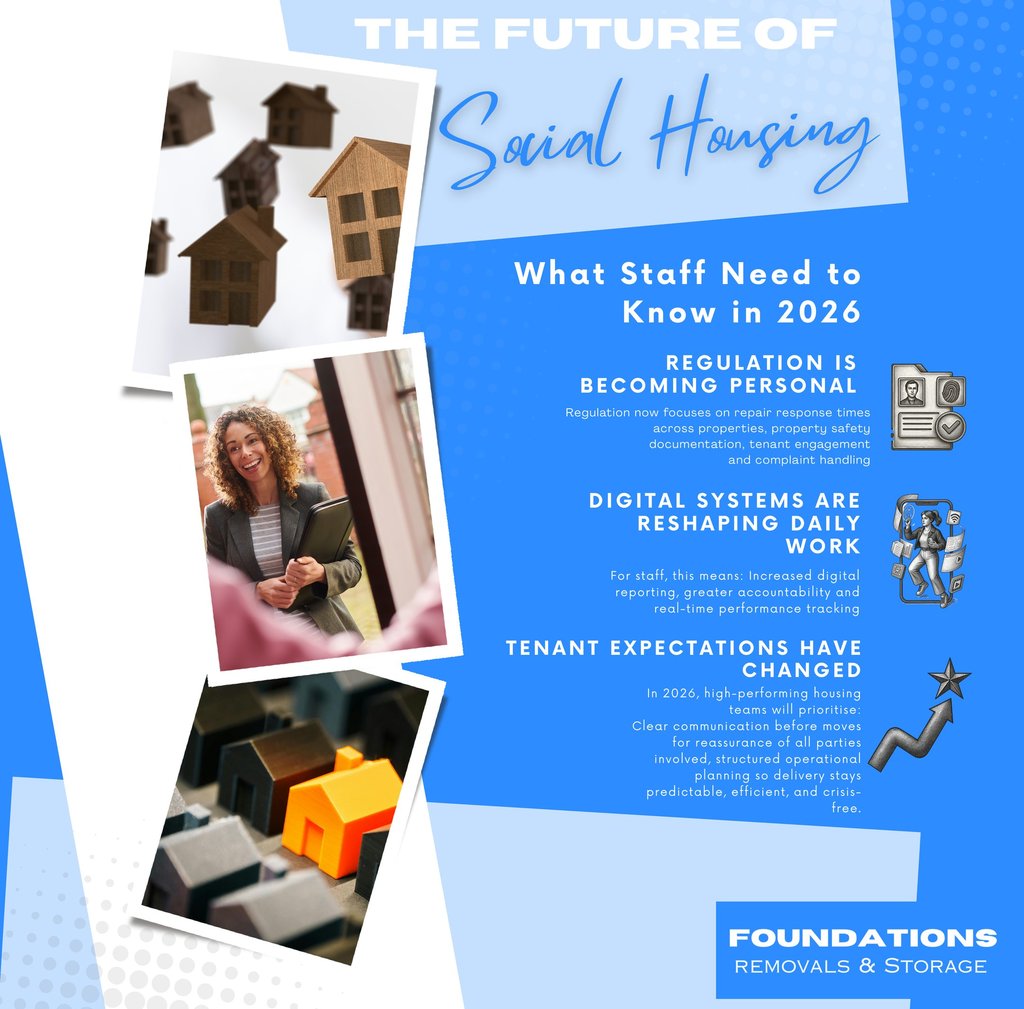
Digital Systems Are Reshaping Daily Work
Housing operations are becoming more data-driven.
Asset management platforms now track:
Property condition
Maintenance cycles
Energy ratings
Contractor performance
Tenant communication logs
For staff, this means:
Increased digital reporting
Greater accountability
Real-time performance tracking
Reduced tolerance for informal processes
Those who adapt to digital systems will find their workload more streamlined.
Those who resist will find processes moving ahead of them.
Decarbonisation Is Moving from Strategy to Street Level
The UK’s legally binding Climate Change Act 2008 commits the country to net zero emissions by 2050.
Net-zero targets are now influencing:
Retrofit schedules
Insulation upgrades
Heating system replacements
Procurement decisions
Frontline teams are increasingly fielding questions from residents about:
Energy efficiency
Disruption during works
Relocation timelines
Temporary accommodation logistics
Clear relocation planning and well-managed removals processes are becoming part of sustainability strategy.
Tenant Expectations Have Changed
Digital platforms mean residents can:
Publicly escalate complaints
Share property conditions online
Contact regulators directly
Housing staff now operate in a visible environment.
In 2026, high-performing housing teams will prioritise:
Clear communication before moves for reassurance of all parties involved
Structured operational planning so delivery stays predictable, efficient, and crisis-free.
Minimised disruption so residents experience as little stress and interruption as possible.
Sensitivity to vulnerable residents so everyone feels respected, safe, and supported throughout.
Because operational execution is now reputation management.
According to a publication on Gov.uk, an English Housing Survey states that over 4 million households in England live in social housing.
That scale means operational shifts affect millions of residents.
And regulation is tightening.
Regulation Is Becoming Personal
The Social Housing (Regulation) Act 2023 strengthened inspection powers and consumer standards.
In 2024, RSH published a report proposing a new approach to consumer regulation which now focuses on:
Repair response times across properties
Property safety documentation
Tenant engagement
Complaint handling
This means housing staff are no longer simply coordinating maintenance.
They are contributing to audit trails.
Every relocation, repair, decant and communication may need to stand up to review.
In practical terms, this requires:
Clear documentation
Structured relocation planning
Reliable contractor coordination
Measurable service timelines
Housing delivery is increasingly compliance-sensitive.
OPENING HOURS
Monday – Friday: 08:00 – 18:00
Saturday: 08:00 – 18:00
Sunday: 08:00 – 18:00
© 2024. All rights reserved.
CONTACT
Address: Elevation Support Services, HQ - 344/354 Gray's Inn Road, London, Greater London, WC1X 8BP
Phone: 020 3957 9335
Email: hello@foundationsremovals.co.uk
Foundations Removals is the trading name of Elevation Support Services Limited